
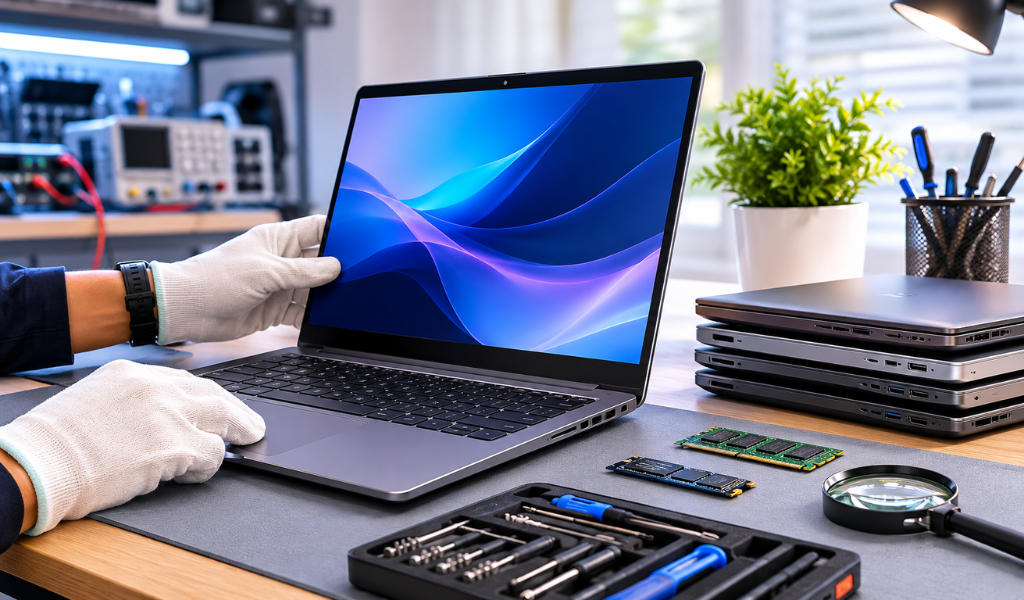
If you've spent any time browsing certified refurbished laptops online, you've probably noticed the word "certified" gets used almost everywhere. It shows up on nearly every listing, every seller's homepage, every product description. But here's the honest truth, not every seller means the same thing when they use that word, and that gap is exactly where buyers end up disappointed.
This guide breaks down what certification is actually supposed to mean, how to tell a genuine process from a marketing label, and what steps you can take to verify it yourself before spending your money.
What Certification is Supposed to Include
At its core, certifying a refurbished laptop means the device went through a structured evaluation before it was ever listed for sale. A real certification process usually covers a few key stages. First, a full diagnostic scan of the internal hardware, checking the processor, RAM, storage, motherboard, and battery for any faults. Second, replacement of parts that failed testing, most commonly batteries, storage drives, or keyboards. Third, a deep clean and cosmetic inspection to grade the laptop's physical condition. And finally, a functional test to confirm everything works as expected under real usage conditions.
When all of these steps happen properly, certification genuinely means something. It's the seller's way of saying "we opened this up, tested it, fixed what needed fixing, and confirmed it works." That's a very different promise than simply wiping the data and reselling a used device as is.
Why Certification Standards Vary so Much Between Sellers
Here's the part most buyers don't realize. There is no single, industry wide body regulating what "certified" has to mean for refurbished laptops in India. Unlike, say, a food safety certification with strict government oversight, refurbished electronics certification is largely self defined by each seller or platform.
This means one seller's certified refurbished laptop might have gone through rigorous multi point testing, while another's certification might be little more than a checklist glance. Neither is illegal, but the quality difference between the two can be significant. This is exactly why doing your own verification matters so much before you commit to buying.
How to Actually Verify a Seller's Certification Claims
The good news is that verifying certification doesn't require any technical expertise on your part. It mostly comes down to asking the right questions and paying attention to how transparently a seller answers them.
Start by asking what the diagnostic process actually checks. A seller who can clearly explain their testing steps, battery health checks, component testing, functional verification, is far more credible than one who gives a vague "yes, it's tested" without specifics.
Next, ask about component replacement policy. Did they replace the battery if it showed signs of wear? Was the storage drive checked for read and write errors? A seller confident in their process will usually be upfront about what gets replaced and under what conditions.
Look closely at how the laptop's cosmetic condition is graded too. Reliable sellers use a clear grading scale, Grade A, B, or C, and are transparent about what each grade actually looks like, ideally with real photos of the specific unit rather than generic stock images.
Finally, and this is often the most telling factor, check the warranty being offered. A seller who stands behind their certification process with a solid warranty period, ideally 6 months to a year, is putting their money where their claims are. A laptop with no warranty or a warranty of just a few days is a red flag worth taking seriously.
What Certification Does Not Guarantee
It's worth being realistic here too. Certification does not mean a laptop will be flawless or perform exactly like a brand new device. Minor cosmetic wear is normal and expected, even on well certified units. What certification does guarantee, when done properly, is that the internal hardware has been checked, faulty components addressed, and the laptop confirmed to function reliably for everyday use.
Setting the right expectations upfront actually makes the whole buying experience smoother. You're not looking for perfection, you're looking for a laptop that's been properly vetted and will hold up under normal daily use.
Why This Matters More Than People Realize
A lot of buyers focus purely on price when shopping for a refurbished laptop, and completely skip past the certification details. But price without proper certification is a gamble. You might save a little upfront and end up paying more later in repairs, or worse, dealing with a device that fails within weeks.
Taking the time to understand and verify certification protects you from that outcome. It shifts the decision from "which listing is cheapest" to "which seller actually backs their product," and that shift makes all the difference in whether you end up happy with your purchase or regretting it a few months down the line.
Frequently Asked Questions
1. What exactly does "certified" mean for a refurbished laptop?
It means the laptop went through diagnostic testing, necessary part replacements, cosmetic grading, and a final functional check before being sold.
2. Is there an official certification standard for refurbished laptops in India?
No, certification standards are largely set by individual sellers, which is why verifying a seller's specific process matters.
3. Does a longer warranty mean better certification?
Generally yes. Sellers confident in their testing process tend to back it with longer warranty coverage, usually 6 months or more.
4. Can I trust a certified refurbished laptop with no visible cosmetic flaws?
Cosmetic condition and internal certification are separate things. Always ask about diagnostic testing regardless of how the laptop looks.
5. What should I ask a seller before buying a certified refurbished laptop?
Ask about their testing process, what parts get replaced, their grading system, and their warranty terms before making a purchase decision.